Meet
Dr. Bill
Meet
The Team
What Sets
Us Apart

Oh no, not the dentist!

April 25th, 2023

If you or your children suffer from dental anxiety, you aren’t alone. According to the Cleveland Clinic, between nine and 15 percent of Americans admit to feeling sufficiently afraid of going to the dentist to avoid making an appointment. The potential consequences of dental anxiety extend beyond poor oral health. Lack of dental care can cause serious but easily preventable medical conditions.

Dental Anxiety versus Dental Phobia

Dental anxiety provokes a sense of fear in people, typically before they arrive at Whitley Family Dental. Those fears or worries are often exaggerated. Dental phobia shares many of the symptoms that characterize dental anxiety. It is a much more serious manifestation of that anxiety, and may provoke a sense of panic or terror in people. While people who suffer from dental phobias know that their feelings are irrational, they are unable to control, stop, or change those thoughts.

People who have dental phobias often avoid going to the dentist, and they come up with every possible excuse to justify not going. The only time a person who suffers from a dental phobia will go to the dentist is when he or she is forced to do so, or because of intense tooth pain. People who have dental anxiety don’t go to such extremes to avoid going to the dentist; anxiety usually begins in anticipation of the appointment.

What We Do to Ease Patient Anxiety

Dr. Bill Whitley and our staff have many techniques we can use to help patients feel more comfortable at their appointments. Dental Fear Central gives some simple suggestions to help children and adults who are apprehensive about going to the dentist, even if they suffer from the more severe form of anxiety: full-blown dental phobia.

  • The Tell-Show-Do Approach: We help our patients relax by making sure they understand what is involved in the exam and any procedure they may undergo. We tell patients about the procedure, show them the tools and equipment we intend to use, and answer questions before actually performing the procedure. This is helpful for patients who don’t know what to expect.
  • Distraction: We offer personal music players and a collection of CDs that patients can listen to. The relaxing qualities of music may help distract a patient enough to make the process less stressful. In-office televisions allow you to watch TV while waiting for your appointment.

Dr. Bill Whitley and our staff know that some patients are anxious about dental treatment, and we go to great lengths to make you feel more comfortable. Good oral health is very important, and when your mouth isn’t healthy, you can suffer from many other easily preventable medical problems.

What's in toothpaste and how does it work?

April 25th, 2023

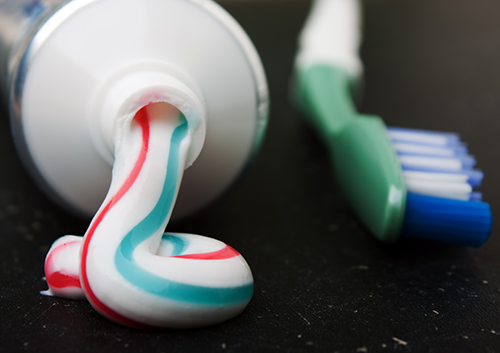
Dr. Bill Whitley and our team recommend that you brush your teeth two to three times a day, for at least two minutes each time. But have you ever wondered what’s in toothpaste and how it actually works? The mouth is home to more than 500 types of microorganisms that feed on leftover food that gets stuck on and around your teeth. Toothpaste is the best line of defense against all those pesky microorganisms (especially when you brush two to three times a day). Here’s how it works.

Abrasives

Toothpaste contains mild abrasive additives that combat microorganisms and fight plaque. When you brush, the abrasives in toothpaste dislodge food particles and microorganisms more effectively than if you simply brush your teeth with water. The abrasives also work to remove food stains and polish the surface of the tooth. Some toothpastes include ingredients like triclosan and Xylitol. These chemicals prevent the growth of bacteria that produce plaque. Plaque not only causes cavities, but it can also lead to more dangerous issues like periodontal disease.

Fluoride

Fluoride is key ingredient in toothpaste. As the microorganisms in your mouth feed off the leftover food particles, they leave behind acid and sulfur byproducts that wear away the enamel of the teeth. This is the fancy, technical way of saying that the acid on your teeth causes cavities. As for the sulfur byproduct –well, that’s just a fancy, scientific name for bad breath. Fluoride works to fight the acid and help protect the teeth. By brushing, the fluoride is incorporated into the tooth enamel, which in turn makes the tooth more resistant to acid and plaque.

Flavoring and Sweetening Agents

Not all toothpaste tastes the same, right? The type of flavoring or sweetening agents added to the toothpaste doesn't have anything to do with fighting microorganisms and plaque, but taste is one of the most important selling points in finding a toothpaste brand you like. Flavoring agents mask the taste of some of the other ingredients in toothpaste, and without those agents chances are nobody would be brushing their teeth two to three time a day.

Care for Your Dentures

April 25th, 2023

Just like natural teeth, Dr. Bill Whitley will tell you that dentures have a tendency to get coated with plaque, which is a sticky, transparent film that attracts food and bacteria. When you don’t take care of your dentures adequately and regularly, plaque can build up, harden, and become difficult to remove. More importantly, it can result in dental problems, including gum disease and infection. Proper care for your dentures also helps them maintain their shape, fit the way they are supposed to, and last longer.

Cleaning your dentures

Your dentures should be cleaned with the same diligence as you clean natural teeth.

  • Take out dentures and rinse them after eating. To remove food particles, run water over your dentures.
  • Clean your teeth after denture removal. Once dentures have been removed, use a soft-bristled toothbrush to brush existing teeth, gums, and tongue.
  • Scrub your dentures on a daily basis. At least once per day, gently scrub your dentures with a soft-bristled toothbrush and denture cleanser.
  • Soak dentures overnight. In order to keep their shape intact, many dentures must remain moist. Always use a mild denture solution recommended by our office. Never use hot water on your dentures, as they may warp their shape.
  • Rinse dentures prior to placing them back in your mouth. This is especially important if you soak your dentures in a denture solution.
  • Dentures are fragile and can break when dropped. It’s a good idea to hold them in a soft cloth or towel to keep them from falling and breaking.

Over time, even with diligent daily care, your dentures may form difficult-to-remove tartar. When this happens, our team at Whitley Family Dental uses a powerful ultrasonic cleaner to remove stubborn, denture build-up.

Proper care for your dentures can help retain their shape, prevent oral issues, and increase their longevity. Visit Dr. Bill Whitley regularly at our convenient Dallas office to maintain your oral health and keep your dentures in tip-top shape.

Whitening Before Veneers—A Bright Idea?

March 22nd, 2023

It’s time. You’ve decided. You’re going to get veneers. Whether it’s to repair a cracked or chipped tooth, to cover discoloration brought on by a root canal or medical condition, to fill in gaps between teeth, or for any other cosmetic reason, veneers can give you back your natural, confident smile.

And now you have just one more decision to make: should you whiten your teeth beforehand?

Many dental professionals find that, for most of us, the best results occur with professional whitening before veneer placement. Why?

  • Your veneers will be carefully matched to the teeth surrounding them.

You don’t want your veneers to look anything but natural, and so Dr. Bill Whitley will make sure that their color is indistinguishable from your other teeth. But there is one important difference between tooth enamel and veneers:

  • Teeth are porous.

As hard as it is, enamel is still porous. And the fact that teeth are porous means that teeth can discolor over time. Coffee, tea, red wine, sodas, darkly hued fruits, and fruit juices—teeth readily absorb pigments from foods. And smoking?  Not only one of the worst habits for your health, it’s one of the major causes of tooth discoloration. This is the downside of having porous enamel.

The upside? The fact that enamel is porous also means that you can brighten your smile with a whitening procedure.

  • Veneers aren’t as porous.

Veneers are generally made of porcelain or a composite resin, with some key differences between them.

Porcelain has a translucent quality that looks like natural enamel, and it is very durable. Porcelain veneers are recommended when teeth have significant chips or gaps. They are also especially stain-resistant.

Composite veneers aren’t as expensive, and usually don’t need as much tooth structure removed to bond them to the tooth. They might not last as long as porcelain, and they aren’t quite as resistant to staining.

When you visit our Dallas office, we can discuss the pros and cons to find the perfect veneers for your needs. Just remember,

  • Once created, veneers can’t change color.

Veneer color should be considered permanent. If your porcelain veneers seem to have dimmed a bit, often a gentle professional polishing will bring them back to their original shine. Composite veneers, as well, can respond to polishing and cleaning. This is the upside of permanent veneer color.

The downside? Veneers can’t be whitened to match your newly whitened tooth enamel. If you decide to whiten your teeth at a later date, your veneers might appear darker than your surrounding teeth. If you want to change veneer color, you will need to replace your veneers. So . . .

Now that you’ve decided to transform your smile with veneers, take a little extra time to talk to your dentist. Find out if whitening makes sense for you for a perfect, uniform match between your other teeth and your veneers.  And then be ready to enjoy your matchless smile!